
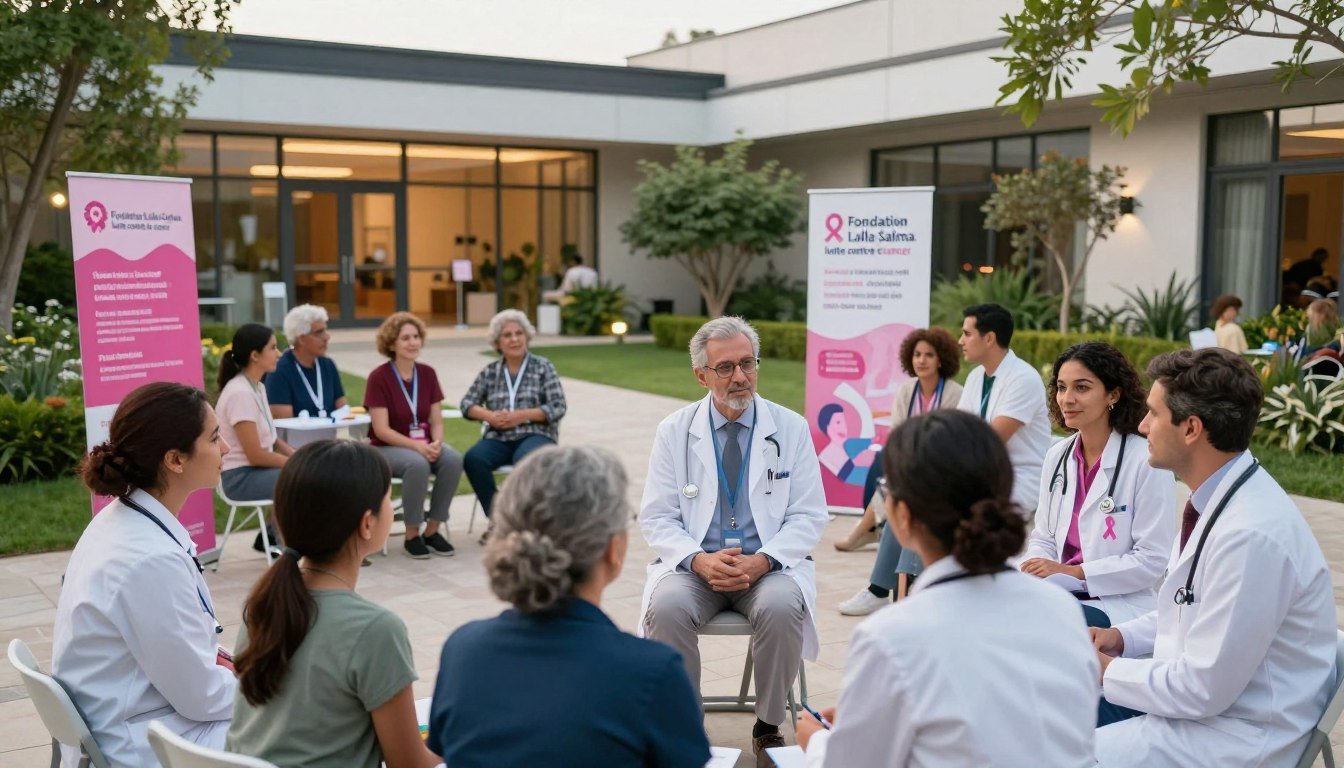
Comment une organisation peut-elle transformer la lutte contre le cancer dans un pays en seulement deux décennies ? Cette question est au cœur de l’engagement d’une institution majeure de la santé publique marocaine.
Depuis vingt ans, cette organisation à but non lucratif se consacre à la prévention et au traitement des maladies oncologiques. Son action répond à un défi de santé croissant au Maroc, où l’incidence du cancer ne cesse d’augmenter.
L’outil essentiel qu’est le Registre des Cancers du Grand Casablanca (2018-2021) illustre son approche scientifique. Il permet un suivi épidémiologique précis pour mieux orienter les politiques de santé.
Son impact va au-delà des chiffres. Grâce à des initiatives innovantes et des partenariats solides, elle a amélioré l’accès aux soins pour de nombreux patients. La présence active sur les réseaux sociaux, comme Facebook et Instagram, témoigne de son dynamisme et de sa volonté de sensibilisation.
Cet article retrace son parcours, ses réalisations et son rôle dans la transformation du système de santé marocain face au cancer.
À retenir
- Vingt ans d’engagement continu dans la lutte contre les cancers au Maroc.
- Création et gestion d’un registre des cancers pour un suivi épidémiologique fiable.
- Une présence digitale active pour mobiliser et informer le public.
- Amélioration tangible de l’accès aux soins et traitements oncologiques.
- Développement de partenariats stratégiques pour renforcer son action.
- Mise en œuvre d’une approche globale, de la prévention à la prise en charge.
- Sensibilisation nationale et internationale sur les défis du cancer.
Présentation de la Fondation Lalla Salma
L’organisation a vu le jour pour répondre à un besoin urgent de structuration de la lutte oncologique au Maroc. Elle a été établie en tant qu’entité pionnière, comblant un vide critique dans le système de santé national.
Histoire et mission
Sa mission fondamentale repose sur trois piliers essentiels. Ceux-ci incluent la prévention par la sensibilisation, l’amélioration de l’accès au traitement pour tous, et le développement de la recherche en cancérologie.
Présidée par Son Altesse Royale la Princesse Lalla Salma, son engagement a reçu une reconnaissance internationale majeure. Elle a été honorée par la Médaille d’Or de l’OMS en 2017.
La participation à la Conférence Mondiale de l’OMS la même année a positionné le Maroc comme un modèle. Sur le terrain, la pose de la première pierre du Centre d’Oncologie d’Oujda a matérialisé cet engagement.
L’institution est ainsi devenue une référence incontournable dans le domaine, tant au niveau national que continental.
Initiatives et programmes de prévention des cancers
La prévention oncologique repose sur une combinaison d’éducation du public et de surveillance épidémiologique. Ces deux axes guident les efforts pour réduire le fardeau de la maladie.
Des campagnes nationales informent sur les facteurs de risque modifiables. Elles encouragent aussi les examens de dépistage précoce.
Actions de prévention et traitement des cancers
Les programmes visent à agir à tous les stades. L’accent est mis sur le dépistage organisé pour des pathologies comme le cancer du sein ou colorectal.
L’accès à des traitements modernes est également renforcé. L’objectif est une prise en charge rapide et efficace pour chaque patient.
Registre des Cancers du Grand Casablanca
Cet outil couvre la période 2018-2021. Il constitue une base épidémiologique fondamentale pour la région la plus peuplée.
Les données révèlent plus de 3.817 nouveaux cas de cancer colorectal chaque année. Cette pathologie représente donc un défi majeur de santé publique.
Le registre permet d’identifier les tendances et de planifier les ressources. Il offre une base factuelle pour améliorer les services oncologiques de manière continue.
Partenariats stratégiques et projets innovants en oncologie
Au Maroc, l’innovation en oncologie passe par des collaborations ciblées avec des leaders mondiaux de la santé. Ces alliances sont cruciales pour combler les lacunes dans la prise en charge des patients.
Une collaboration majeure unit des acteurs comme Merck et Cooper Pharma. Ce partenariat vise à transformer l’offre de soins sur le terrain.
Collaboration avec Merck et Cooper Pharma
Ce travail commun se structure autour du programme SHAPE (Systematic Health Access & Patient Enablement). Il améliore l’accès aux soins dans les pays à revenu faible.
L’objectif est d’éliminer les barrières financières et géographiques. Les partenaires s’engagent à créer un impact durable pour les patients.
Programme SHAPE et innovations thérapeutiques
Cette initiative introduit des traitements innovants, comme les thérapies ciblées. Elle concerne notamment les cancers colorectaux et de la tête et du cou.
Le programme inclut un volet important de formation pour les oncologues. Il renforce aussi les infrastructures hospitalières locales.
Cette approche globale touche toute la chaîne de soins. Elle permet une amélioration systémique de la prise en charge du cancer.
Impact des actions et actualités de la Fondation
L’impact concret des actions menées se mesure à travers des événements phares et une sensibilisation continue. Cette dynamique montre l’influence réelle du travail sur la santé publique.
Événements majeurs et inaugurations
L’organisation marque régulièrement le calendrier sanitaire. Elle coordonne des actions comme la Journée Mondiale Sans Tabac.
Ces moments fédèrent les communautés autour d’un message de santé. Ils renforcent la visibilité des enjeux de prévention.
Les inaugurations de nouveaux équipements sont aussi des temps forts. Elles symbolisent les progrès tangibles dans l’accès aux soins.
Rôle dans la sensibilisation et la prévention
La stratégie utilise une approche multicanale. Elle combine médias, réseaux sociaux et actions de terrain pour toucher tous les publics.
Un programme innovant de labellisation des entreprises sans tabac mobilise le secteur privé. Il crée des environnements de travail plus sains.
Les publications scientifiques de l’entité partagent l’expertise marocaine à l’international. Ce rayonnement inspire d’autres pays.
Un travail avec le ministère de l’Éducation intègre la prévention dans les écoles. Cela vise à éduquer les jeunes générations pour un avenir en meilleure santé.
Conclusion
La transformation du paysage oncologique au Maroc repose sur un modèle intégré de santé publique. Cette approche a prouvé son efficacité sur deux décennies.
L’engagement visionnaire de Lalla Salma et la détermination de la fondation Lalla ont mobilisé le pays. Ils ont fait de la lutte contre le cancer une priorité nationale.
L’héritage est solide. Il inclut la prévention, le dépistage et l’amélioration des traitements. Ce programme complet touche tous les aspects de la maladie.
Les efforts doivent continuer face à l’augmentation des cancers. Le modèle marocain est désormais un exemple international reconnu.
Pour plus d’informations ou pour soutenir cette fondation, consultez ses plateformes officielles. L’engagement de tous reste essentiel.
FAQ
Quels sont les principaux objectifs de cette organisation marocaine dans la lutte contre le cancer ?
Son action se concentre sur trois piliers : la prévention, l’amélioration de la prise en charge des malades, et le soutien à la recherche. Elle met en œuvre des campagnes de sensibilisation du public et des professionnels de santé pour favoriser un dépistage précoce.
Comment contribue-t-elle concrètement à la prévention des cancers au Maroc ?
Elle déploie des programmes nationaux d’information et d’éducation sur les facteurs de risque. Ces initiatives visent à encourager des modes de vie sains et à promouvoir les examens de dépistage organisés pour certains types de tumeurs.
Quel est le rôle du Registre des Cancers du Grand Casablanca ?
Ce registre est un outil essentiel pour collecter des données épidémiologiques fiables. Ces informations guident les politiques de santé publique, permettent d’évaluer l’impact des actions de lutte et d’orienter la recherche.
Avec quels partenaires travaille-t-elle pour développer l’oncologie ?
Elle collabore avec des acteurs internationaux comme Merck et des sociétés pharmaceutiques locales telles que Cooper Pharma. Ces partenariats stratégiques visent à faciliter l’accès à des thérapies innovantes et à renforcer les compétences des soignants.
Qu’est-ce que le programme SHAPE dans le domaine du traitement ?
Le programme SHAPE est une initiative novatrice qui soutient le développement de projets de recherche clinique au Maroc. Il accélère l’introduction de médicaments de pointe et améliore la qualité des soins proposés aux patients.
Quels sont ses projets récents en matière d’infrastructures de soins ?
Elle a inauguré de nouveaux centres dédiés à la prise en charge des malades, comme l’Institut Hospitalier Universitaire d’Oncologie. Ces structures intègrent les dernières innovations thérapeutiques et offrent un accompagnement global.