
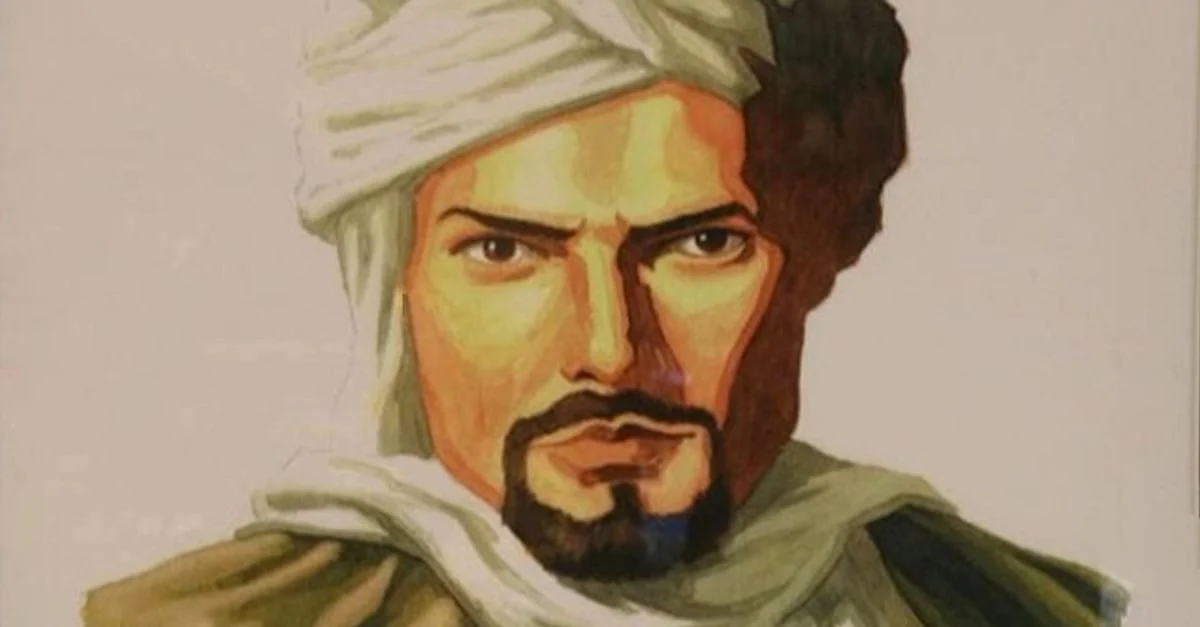
What if one person could travel farther than anyone before the invention of the steam engine?

In 1325, a young man left his home in Tangier, Morocco. He began a simple religious pilgrimage. This journey, however, sparked a 24-year epic of exploration.
The traveler was Ibn Battuta. He was of Berber descent from the Lawata tribe. His curiosity and sense of adventure led him across the known world.
He covered over 120,000 kilometers. His path stretched from the Volga River in the north to Timbuktu in the south. He journeyed from Morocco in the west all the way to China in the east.
This distance surpassed all other pre-modern explorers. It dwarfed the travels of Marco Polo and Zheng He. His adventures occurred during the 14th century, a time of rich connections across the Islamic world.
His detailed memoirs were later written down by a scholar named Ibn Juzayy. The book is called the Rihla. It offers a priceless window into the cultures, cities, and marvels of his era.
Key Takeaways
- A young man from Tangier, Morocco, began a pilgrimage in 1325 that turned into a three-decade global journey.
- Ibn Battuta traveled an estimated 120,000 kilometers, a distance unmatched by any explorer before the modern age.
- His route covered an incredible range, from West Africa to China and from Russia to the Indian Ocean.
- His travels were documented in a book known as the Rihla, a vital historical record of the 14th-century world.
- He lived during a period when trade routes and religious networks created a highly interconnected Islamic world.
- His journey highlights how a single quest for knowledge can lead to the exploration of entire continents.
Biography: Early Life and Cultural Background
In 1304, a birth in a North African port city set the stage for one of history’s greatest adventures. The young man was born on February 24 in Tangier, Morocco. His family were respected Islamic legal scholars, known as qadis, from the Berber Lawata tribe.
Tangier was a vibrant and cosmopolitan ville under the Marinid dynasty. This rule fostered a rich climate of Islamic scholarship and learning. Growing up here, he heard stories from merchants and travelers passing through the busy port.
His formal education followed the Sunni Maliki school. This was the dominant form of Islamic jurisprudence in the Maghreb. This training shaped his deep religious understanding and legal mind.
This unique upbringing was crucial. His family’s standing and his Berber culture gave him a strong identity. The education and exposure prepared this future personnage for the world. He gained the social credentials needed for the judicial roles he would later hold across continents.
The Making of a Traveler: Education and Motivation
Formal training in religious jurisprudence provided more than just knowledge—it opened doors to the world. The young scholar immersed himself in the Maliki school of Islamic law. This deep education gave him respected credentials across Muslim societies.
At 21 years old, he felt a strong call. His decision to perform the Hajj pilgrimage combined religious duty with a thirst for adventure. This journey was meant to be a spiritual trip, but it ignited a much larger exploration.
Islamic culture valued the rihla, a tradition where scholars traveled to learn. This custom supported his long journey. His legal training allowed him to discuss theology with rulers and scholars everywhere.
His personal qualities were perfect for travel. Curiosity and adaptability helped him handle new cultures. As an educated man from a good family, he gained quick trust in elite circles.
The pilgrimage served as the perfect introduction to a life of discovery. It was the spark for nearly thirty years of continuous travel across continents. His detailed writings later made him a famous author of medieval travel literature.
The First Pilgrimage: Journey to Mecca
The journey began not as an epic exploration, but as a devout pèlerinage mecque. In June 1325, a 21-year-old scholar left Tangier alone. His emotional farewell to his parents marked a separation that would last 24 years.
He followed overland routes through the Maghreb. Key stops included Tlemcen, Béjaïa, and Tunis. For safety, he joined merchant caravans, a common practice.
In Sfax, he married for the first time. This union was brief, ending in divorce. It began a pattern of multiple marriages during his voyages.
Overland Routes Through North Africa and Egypt
After many mois of travel, he reached Alexandria in spring 1326. There, ascetic holy men prophesied his future as a world traveler. This confirmed his growing destiny.
He continued to Cairo for a fois. An attempt to reach the Red Sea port of Aydhab failed due to local rebellion. This forced a change in plans.
Spiritual and Cultural Inspirations
The pèlerinage was a core religious duty. It also represented deep personal transformation. Medieval Muslim travelers undertook this hazardous journey for faith and knowledge.
For Ibn Battûta, this first trip was the spark. It ignited a lifetime of discovery across continents. His initial goal was spiritual, but the road led to unparalleled voyages.
Navigating the Maghreb and the Nile Region
The path from North Africa to Egypt was a corridor of ancient wonders and bustling cities for the young traveler. Ibn Battûta moved quickly through the central Maghreb. He reached the vibrant ville of Tunis during a festive Eid celebration marking Ramadan’s end.
By April 1326, he arrived in Alexandria. His writings provide a detailed look at the famous Pharos lighthouse. He noted this wonder still stood, but on a later return in 1349, he found it in ruins.
Next, his journey led to Cairo, capital of the Mamluk Sultanate. He stayed for a month in this major center of Islamic life. His descriptions included the unique Egyptian tax system. It was tied directly to the annual Nile flood height, which predicted harvest success.
During this voyage, he passed the Pyramids of Giza. They were still covered in smooth, shining limestone casing. His récit even tells of a ruler who tried to break into one using hot vinegar.
From Cairo, he tried to travel up the Nile toward the Red Sea port of Aydhab. Local conflicts between Egyptians and Bedja people forced him back. Ibn Battûta’s records from this region offer priceless snapshots of 14th-century life and geography.
Venturing into Syria and Palestine
A prophetic encounter in Egypt redirected the traveler’s path toward the historic lands of Syria and Palestine. A holy man advised that reaching Mecca required a journey through Syria. This strategic detour opened a chapter rich in sacred lieux and ancient villes.

Historic Sites and Holy Land Encounters
Ibn Battûta entered the Holy Land through Gaza. He visited Hebron and Jerusalem, sites of profound religious significance. His récit notes a curious fact about Jerusalem.
Fear of a Crusader return had led authorities to destroy the city’s fortifications. This left it strategically vulnerable. He marveled at the Dome of the Rock’s beauty.
His route then traced the Levantine coast. He passed through Tyre, Sidon, and Beirut. The journey turned inland to the great ville of Damascus.
He praised Damascus as paradise on earth. His detailed descriptions of the Great Mosque of the Umayyads are invaluable. He saw the tomb of Zechariah there.
Further travels took him to Aleppo, Homs, and Hama. He noted Hama’s charming orchards and turning water wheels. He also documented Crusader castles like Krak des Chevaliers.
In Damascus, he received a formal teaching license in 1326. This recognized his scholarly credentials. He finally joined a large caravan departing for Mecca, with a stop at Bosra.
Experiencing the Holy Land: Religious Significance and Pilgrimage
The caravan’s slow progress across the Arabian Desert brought the pilgrim closer to the heart of Islam. After a stop at Bosra, the group faced the harsh, empty sands. This challenging crossing was a test of faith before reaching the sacred lieux.
Along the way, Ibn Battûta passed the ancient site of Al-Hijr. He saw tombs carved into red sandstone cliffs. His interpretation connected them to Quranic stories, viewing them through a lens of religion.
Arriving in Medina, he prayed at the Prophet Muhammad’s tomb. He documented the mosque’s expansions and the political disputes they caused. This visit was a profound moment for any musulmans traveler.
The journey continued to Mecca for the main pèlerinage mecque. He provided detailed descriptions of the rituals. He also witnessed the Mawlid celebration, noting the Qadi’s charitable distributions.
Completing the hajj earned him the title “El-Hajji.” This pèlerinage was a spiritual peak. Instead of returning home, he chose to travel on. On November 17, 1326, he departed for Iraq, transforming from pilgrim to explorer.
Maritime Journeys: Red Sea, Somalia, and the Swahili Coast
The next chapter of exploration unfolded along the vibrant coasts of the Red sea and East Africa. After a second hajj, Ibn Battuta reached Jeddah and embarked on a slow voyage south. He used small, sewn-plank boats called jalbahs, fighting against persistent winds.
In Yemen, he visited Zabid and the highland town of Ta’izz. There, he met King Mujahid Nur al-Din Ali of the Rasulid dynasty. His journey likely continued directly to the vital port of Aden.
From Aden, a ship carried him across the Gulf of Aden to the Somali coast. He stopped at Zeila and Cape Guardafui. He then described Mogadishu as an exceedingly large city with wealthy merchants known for fine textiles.
Its ruler, Sultan Abu Bakr, spoke Somali and Arabic and presided over a sophisticated court. The traveler continued south along the Swahili coast, visiting Mombasa and Kilwa.
Kilwa, a major gold trading center, impressed him with its beautiful wooden buildings and coral stone mosques. He praised Sultan al-Hasan ibn Sulaiman’s humility. Monsoon winds dictated these maritime travels across the Indian Ocean sea.
Crossroads of Civilizations: India, Central Asia, and the Mongol Empire
The overland route to India presented a mosaic of emerging empires and ancient trade networks. After a third pilgrimage, Ibn Battûta aimed for a position with the sultan of Delhi. This ambitious goal required crossing Anatolia and the vast pays of the Mongol successor states.
Challenges Along the Silk Road
In Anatolia, he met Orhan, souverain of the rising Ottoman beylik. He described Orhan as the greatest Turkmen king. He also praised Bursa, the Ottoman capital, for its fine markets and gardens.
Journeying into the Golden Horde’s realm, he reached the court of Özbeg Khan. This connection led to a remarkable diplomatic voyage. He joined a royal party traveling to Constantinople, documenting the Byzantine capital.
His voyages then took him to the historic Silk Road cities of Bukhara and Samarkand. He noted their grandeur, but also scars from past Mongol invasions. The relative stability of the Pax Mongolica still eased travel across these contrées.
The final challenge was the Hindu Kush mountains. Called the “Hindu-slayer,” the pass was deadly due to extreme cold. After this harsh crossing, his party finally reached the Indus River in 1333, en route to Delhi.
The Role of Caravans and Maritime Trade in His Voyages
The vast distances of the 14th-century world were bridged by two powerful systems: the caravan and the trading ship.
Ibn Battûta’s incredible voyages were possible because he moved through a connected Islamic world. Shared religion, language, and customs provided a familiar framework across continents.
For overland travel, joining a caravan was essential. These large groups offered safety from bandits on dangerous routes. They also used caravanserais—fortified inns that provided lodging, food, and security for travelers and their goods.
At sea, different vessels were used for each leg of the voyage. In the Red Mer, he sailed on small, sewn-plank jalbahs. For ocean crossings, he boarded larger merchant ships. These journeys followed the seasonal monsoon winds, a point critical for scheduling.
His status as a scholar gave him access to these commercial networks. He could secure passage and find hospitality. Despite this, dangers like piracy and political unrest were a constant part of travel.
These interconnected trade voyages created economic links from Africa to Asia. A nombre of cities thrived as vital hubs along these routes, supporting the epic journeys of the age.
Ibn Battuta and His Global Legacy
When measuring sheer distance traveled, one figure from the medieval Islamic world stands alone. Ibn Battuta journeyed over 120,000 kilometers across three decades. This incredible feat far surpassed the routes of other famous explorers.
His recorded distance dwarfs the travels of Marco Polo and Zheng He. This has earned him the title of the greatest pre-modern traveler. Some scholars even call him “The Islamic Marco Polo.”
His written account, the Rihla, is his lasting gift. As an author, he created a priceless primary source. It documents the political, economic, and social life of the 14th-century world.
These voyages provided a unique eyewitness introduction to diverse cultures. From West Africa to Southeast Asia, his work maps a connected Islamic civilization. Historians and geographers have studied his records for centuries.
The traveler’s legacy lies in this detailed window into a past world. His journeys demonstrated amazing human curiosity and endurance. They continue to inspire both scholarly research and popular fascination today.
The Sultanates and Islamic Authority Encountered on the Journey
One of the most remarkable aspects of the traveler’s journey was his repeated access to the highest echelons of political power. His credentials as a Maliki legal scholar served as a universal passport. This opened doors to royal courts across the Islamic world.
Advisory Roles and Judicial Appointments
In Delhi, Sultan Muhammad bin Tughluq appointed him as a qadi, or Islamic judge. He held this prestigious position for approximately nine years. This role provided deep insights into the sultanate’s administration.
Later, in the Maldives, he again served as a judge. His marriages to daughters of local viziers, however, raised political suspicions. The chief vizier eventually asked this influential figure to leave the islands.
Interactions with Rulers and Local Leaders
His travels brought him before a stunning array of rulers. He met Hafsid sultans in Tunisia and Mamluk authorities in Egypt. He also encountered the Rasulid king in Yemen and Sultan Abu Bakr in Mogadishu.
Further east, he documented the court of Sultan al-Hasan ibn Sulaiman in Kilwa. He even traveled with the entourage of Özbeg Khan of the Golden Horde. This granted him a rare visit to Byzantine Emperor Andronikos III in Constantinople.
His Maliki expertise was in high demand in many lands. Local Muslim communities often requested him to serve as their religious judge. This unique skill set made him a valuable advisor in every kingdom he entered.
Detailed Accounts of Cultural Diversity Across Regions
One of the most valuable aspects of the journey is its rich documentation of cultural diversity. His récit offers a window into countless pays and contrées.
He recorded surprising social customs. Among Turkish tribes, he noted women held high status and were not veiled. They actively participated in trade, bringing goods to market.
In northern contrées like Bolghar, he described extremely short summer nights. This created challenges for musulmans observing prayer times. Winter brought severe cold where water froze instantly during ablutions.
His descriptions compared great villes like Damascus and Samarkand. He detailed architecture, economies, and local culture. The nombre of different practices he documented remains invaluable for understanding that temps.
Contributions to Geography, Cartography, and Historical Narratives
How does a traveler who lost all his notes produce one of history’s most detailed journey records? Upon his return to Morocco, Ibn Battûta dictated his entire récit from memory. The scholar Ibn Juzayy al-Kalbi transcribed it.
The resulting book is titled A Gift to Those Who Contemplate the Wonders of Cities and the Marvels of Travelling. It is commonly called the Rihla. Historians debate the reliability of some descriptions, especially of distant locations.
Ibn Juzayy occasionally borrowed material from earlier writer Ibn Jubayr. This is a minor part of the work. He was largely a faithful editor of the traveler’s vivid memories.
Despite these questions, the Rihla is an invaluable source. It expanded geographical knowledge of the 14th-century monde. The voyages detailed political events and social customs from Africa to Asia.
Modern scholars use this récit with other sources. It helps reconstruct the history and geography of that temps. The work filled major gaps in contemporary maps and understanding.
Preserving the Memory of an Epic Journey
After nearly a quarter-century of wandering the globe, the traveler finally turned his steps toward home. His retour to Morocco in November 1349 marked the end of twenty-four ans of continuous voyages. He entered the city of Fez, a place he had left as a young man.
Documenting the Rihla and Its Impact on History
A few mois later, he made a brief trip to al-Andalus. He visited Granada before returning to Morocco. This was not his final journey.
He embarked on one last major expedition. He crossed the Sahara Desert from Sijilmasa. He reached the lands of the Niger River and the famous city of Timbuktu.
His definitive retour came in December 1353. He was about forty-nine years old. The Sultan Abu Inan then ordered him to dictate his memories.
The scholar Ibn Juzayy acted as his scribe. This was a monumental task. The traveler had lost all his original notes during his arduous travels.
He reconstructed his entire récit from mémoire. The compilation work took place between December 1355 and February 1356. This preserved his account for future generations.
Little is known about his final temps. He lived quietly in Fez until his death. The exact date is uncertain, possibly 1368 or 1377.
This act of preservation secured his mémoire. It ensured the fin of his physical travels was not the end of his story. His documented experiences became a priceless window into the 14th-century world.
Lessons from Ibn Battuta’s Travels: Timeless Reflections
The story of an unparalleled voyage is not just about places visited. It is about the enduring spirit of exploration. Ibn Battûta’s three-decade journey offers timeless lessons for our connected monde.
His epic trek shows incredible human qualities. Curiosity, courage, and adaptability drove him forward. The medieval Islamic milieu was highly interconnected through trade and scholarship.

Shared islamic culture and religion provided a common framework. This gave the voyageur safety, hospitality, and work. His notes reveal both cultural diversity and universal human concerns.
He valued direct experience over second-hand knowledge. His long retour home highlights themes of belonging. Modern voyageurs can learn from his open, yet sometimes biased, perspective.
His journey mapped a monde where faith defined place more than borders. In the final analysis, his temps in that milieu teaches us about cultural exchange. The human urge to explore remains powerful today.
Conclusion
More than just a record of miles, the traveler’s account maps the very soul of a connected civilization. Ibn Battuta’s three-decade voyage saw him serve as a pilgrim, a judge, and an advisor to sultans. His journey revealed a vast Islamic world linked by faith, trade, and scholarship.
He died in Fez around 1368. His lasting gift is the Rihla. This book is a priceless primary source. It documents the cultures, politics, and geography of 14th-century lands from Africa to China.
Ultimately, Ibn Battuta stands as a powerful symbol. His life testifies to timeless human curiosity and the enduring urge to explore the wider world.
FAQ
What was the main reason Ibn Battuta began his travels?
His primary motivation was to complete the hajj, the sacred pilgrimage to Mecca. This religious duty launched a journey that would last nearly three decades, driven by a deep curiosity about the wider Islamic world and its diverse cultures.
How did he manage to travel such vast distances?
He relied heavily on the networks of the medieval Muslim world. He joined merchant caravans for overland routes and sailed on trading dhows across seas. His status as an educated scholar also helped him gain hospitality and protection from local sultans and rulers along his route.
What are some of the most notable places he visited?
His voyage took him to incredible places across Africa, Asia, and Europe. Key stops included the Swahili Coast cities like Kilwa, the immense sultanate of Delhi in India, the Maldive Islands where he served as a judge, and even distant China, reaching the port of Quanzhou.
Who wrote down the story of his adventures?
Near the end of his life, the Marinid sultan of Morocco commissioned a writer named Ibn Juzayy to record the traveler’s tales. This collaboration produced the famous travelogue known as the “Rihla,” which means “The Journey,” preserving his experiences for history.
Why are his accounts so important to historians today?
His detailed notes provide a priceless firsthand view of the 14th-century world. They offer insights into the political, economic, and social life of regions from Mali to the Mongol Empire, documenting customs, trade, and the unifying role of Islamic culture across continents.
Did other Muslim travelers write similar accounts?
Yes, he was part of a rich tradition. Earlier writers like Ibn Jubayr documented their pilgrimages. However, the sheer scope of his voyages—covering far more ground over a longer time—makes his narrative uniquely comprehensive for the period.