
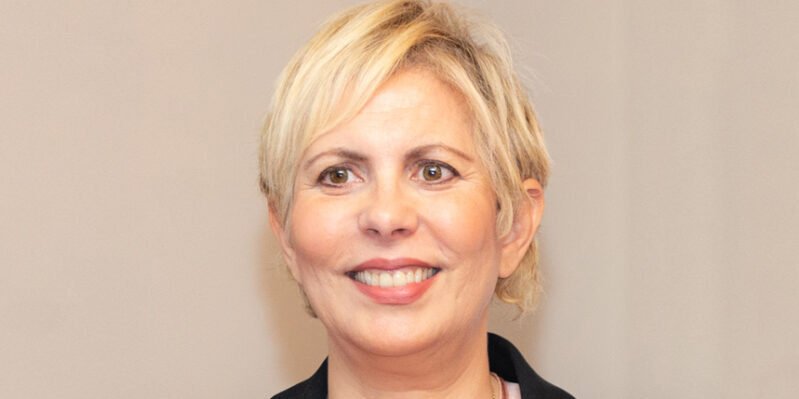
What does it take to shatter decades of tradition and become a defining force in a nation’s economic future?
This question finds its answer in the remarkable career of a Moroccan finance pioneer. In May 2025, His Majesty King Mohammed VI appointed her as Director General of the Fonds Mohammed VI pour l’Investissement. This role places her at the helm of a key national investment fund.
Her journey spans approximately forty years in the financial sector. Before this prestigious appointment, she served as présidente of Morocco’s capital markets authority, the AMMC, from 2016. There, she led significant regulatory reforms.
A graduate of ESSEC Paris, she is fluent in four languages. Forbes Middle East recognized her influence, ranking her among the twenty most influential Arab women in 2025.
This article explores her early life, groundbreaking career, and advocacy for women in leadership. Her story mirrors Morocco’s evolving financial landscape and the global push for gender equality in business.
Key Takeaways
- A leading Moroccan financier was recently appointed to lead a major national investment fund by royal decree.
- She brings nearly four decades of experience from top roles in Morocco’s financial regulatory and private sectors.
- Her previous leadership at the country’s capital markets authority involved implementing major reforms.
- She is a prominent advocate for increasing women’s representation in corporate governance and business.
- Her international education and multilingual skills have made her an effective global ambassador for Moroccan investment.
- Her career achievements have earned her recognition on prestigious lists like Forbes Middle East’s most influential Arab women.
- Her professional path reflects broader trends in Morocco’s economic development and gender progress.
Early Life and Education
The journey to the top of Morocco’s financial sector began in 1963 in the bustling city of Casablanca. Nezha Hayat was born into a progressive family that valued education and opportunity for all its children.
Childhood and Family Background
As the eldest of seven siblings, she grew up in a household where intellectual curiosity was encouraged. Her father, a high-ranking civil servant, believed in providing equal quality education to both sons and daughters.
He also exposed them to culture, sports, and foreign languages. The family’s relocations from Casablanca to Marrakech and then Tangier broadened her perspective.
These moves across major Moroccan cities during her formative years ingrained a deep understanding of the country’s diverse société.
Academic Milestones and Formation
Academic excellence started early. She earned a baccalauréat C, a science-focused diploma, from the French Mission school. This demonstrated a strong aptitude for technical subjects.
Her educational path then led to France. She attended preparatory classes at the prestigious Lycée Sainte-Geneviève. These classes were designed for entrance into elite business schools.
She gained admission to ESSEC Paris, a top French business school. This international education provided the analytical foundation for her career. Her father’s forward-thinking values on women’s education were crucial. They opened doors that were rare for Moroccan women at the time.
This strong educational foundation was key to the création of her pioneering career path.
A Groundbreaking Career in International Finance
The foundation of a pioneering career in global finance was laid not in boardrooms, but in the turbulent markets of 1980s Spain. After completing studies at ESSEC Paris, Hayat entered the financial world by joining the Spanish banking sector.
Early Experiences in Spain and Financial Beginnings
Her initial position was at Banco Atlantico in Madrid. Here, she specialized in international risk management, focusing on Latin American markets during a period of economic turmoil.
She managed the restructured debt portfolio amid the Latin American debt crisis. Several countries had defaulted on sovereign obligations, creating a complex landscape.
Hayat advised financial institutions on navigating debt swaps and restructuring. This work occurred in largely unregulated over-the-counter markets.
This hands-on experience served as her introduction to international marchés des capitaux. It provided practical knowledge of market dynamics and risk assessment.
Her career advanced rapidly. She later headed the corporate finance department at Bravo y Garayalde. This demonstrated her leadership capabilities in investissement strategies.
These early years exposed her to sophisticated financial instruments and the complexities of emerging market finance. This international foundation would prove invaluable for her future rôle in Morocco’s financial development.
Return to Morocco: Shaping the Financial Landscape
After honing her skills abroad, a decisive homecoming in the 1990s set the stage for transformative contributions to Morocco’s financial sector.
Nezha Hayat chose to work with BNP Paribas upon her return. In 1993, she directed international clientele at the bank’s offshore subsidiary in Tanger.
Key Roles at BNP Paribas and Société Générale
Her move to Société Générale in Casablanca came in 1995. This timing aligned with major reforms in the nation’s marchés des capitaux.
The reforms included privatizing state institutions and creating new brokerage firms. Collective investment funds, known as OPCVM, were also established.
Transforming the Bourse de Casablanca
She joined the conseil d’administration of the Bourse de Casablanca. Her role involved the market’s privatization and development.
Between 1992 and 1996, stock market capitalization nearly quadrupled. It grew from $2.4 billion to an impressive $8.6 billion.
She also led the Professional Association of Brokerage Firms (APSB) for two terms. Her work secured incentives for companies to list on the bourse.
Simultaneously, she served on the National Conseil of Morocco’s main business confederation (CGEM). This expanded her influence on national economic policy.
Nezha Hayat’s Impact on the Moroccan Capital Markets
A pivotal royal appointment in 2016 marked a new chapter in the oversight of Morocco’s financial markets. His Majesty King Mohammed VI named Nezha Hayat as the présidente of the Autorité Marocaine du Marché des Capitaux (AMMC).
This move signaled a major career shift. She transitioned from the private banking sector to public sector regulation.
Leadership at the AMMC and Capital Market Reforms
The autorité marocaine was established by law in 2013. It truly began operating under her leadership, replacing an older council.
The new authority gained stronger independence and a broader regulatory scope. Hayat moved from being a market participant to overseeing all financial operators.
Innovative Regulatory Approaches and Achievements
Her tenure involved deep reforms. She reorganized internal structures for better efficiency.
The marché des capitaux framework was aligned with global standards. The AMMC also earned the ISO 37001 anti-corruption certification.
This demonstrated a strong commitment to transparency. In 2020, she was elected president of the Africa and Middle East Regional Committee of IOSCO.
This role lasted until 2024. It elevated Morocco’s profile in international financial organisation circles.
Her philosophy balanced robust investor protection with support for market development. This approach strengthened trust in Moroccan valeurs mobilières and the broader économie.
Championing Women’s Leadership in Finance
Breaking long-standing barriers in banking governance opened doors for future generations of women leaders. Nezha Hayat’s advocacy for gender equality became a core part of her professional identity.
Breaking the Glass Ceiling in Banking
In 2007, she made history by joining the directoire of Société Générale Maroc. This marked the first appointment of a femme to a bank’s management board in Morocco.
She believed that having femmes in such roles was crucial for sound corporate governance. It was more than just a diversity checkbox.
Empowering Initiatives: Club for Women Administrators and AFEM
To drive systemic change, she co-founded the Club des femmes administrateurs (CFA Maroc). This club aimed to shatter the glass ceiling in corporate conseils d’administration.
The création of this group was a strategic move. It sought to increase the number of femmes administrateurs on boards.
It launched a lobbying campaign in 2012. The effort gained support from the global Women Corporate Directors network.
Collaboration with business leader Miriem Bensaleh-Chaqroun was key. It helped establish the club‘s importance in Morocco’s economic landscape.
A major success came when Bank Al-Maghrib issued a circular. It mandated the appointment of femmes to boards of financial institutions.
She also helped create the Association des Femmes Chefs d’Entreprises du Maroc (AFEM). This supports women entrepreneurs and business owners.
Her rôle extended beyond personal achievement. She built pathways for the next generation of femmes in leadership.
International Recognition and Honors
Her professional achievements extend beyond Morocco’s borders, earning her decorations from monarchs and a seat at the table of global regulatory bodies.
Awards, Distinctions, and Global Acknowledgment
National recognition came first. The roi of Morocco, King Mohammed VI, decorated her as an Officer of the Order of the Throne (Wissam Al-Arch) in 2013.
International honors followed. In juillet 2019, King Felipe VI of Spain awarded her the Commander of the Order of Civil Merit.
The Spanish Ambassador to Morocco presented the medal. This roi‘s award acknowledged her bridge-building between financial markets.
Her global impact was further validated. The G8 recognized her contributions to financial services.
Forbes Middle East later ranked her among the twenty most influential Arab women in 2025.
Influence in International Financial Forums
Her leadership reached pivotal global platforms. In June 2020, she joined the board of the British Chamber of Commerce for Morocco.
This role strengthened international business ties. A more significant post was at the organisation IOSCO.
From 2020 to 2024, she served as présidente of its Afrique Moyen-Orient Regional Comité (AMERC).
At the tête of this comité, she guided regulatory harmony across the Afrique Moyen-Orient region.
This position placed Morocco at the tête of critical discussions on bourse development and investor protection.
Leading this IOSCO comité underscored her authority. It also signaled Morocco’s rising voice in global bourse governance.
These honors reflect both individual excellence and the nation’s growing financial stature.
Conclusion
Morocco’s economic ambitions for the coming decade now rest in the hands of a proven architect of its financial marché des capitaux. Her four-decade journey showcases a career of pioneering firsts and regulatory leadership.
This path includes breaking barriers as the initial woman on a bank’s management board. She later presided over the national capital markets authority.
Parallel advocacy for women’s leadership created systemic change beyond personal success. In May 2025, this expertise led to a royal appointment as Director General of the Fonds Mohammed VI pour l’Investissement.
This sovereign fonds acts as a catalyst for strategic investissement in innovation, infrastructure, and SME development. Minister Nadia Fettah Alaoui called the move a well-deserved consecration.
The challenge is advancing the Kingdom’s investissement ambitions to transform the economy. Her unique blend of international experience and commitment to inclusive growth positions her for this critical présidence.
This role culminates a remarkable career and begins a new chapter with transformative potential for national development.
FAQ
What is Nezha Hayat best known for in her professional career?
She is best known as a transformative leader in Moroccan finance. Her key roles include serving as the President of the Moroccan Capital Market Authority (AMMC) and as the first woman to lead the Casablanca Stock Exchange. Her work has been pivotal in modernizing the country’s financial regulations and stock market operations.
How did Nezha Hayat contribute to reforming Morocco’s capital markets?
As head of the AMMC, she championed significant reforms to strengthen investor protection and boost market transparency. Her innovative regulatory approach helped align the local bourse with international standards, fostering greater confidence among domestic and foreign investors in the Moroccan economy.
What role has she played in advancing women’s leadership in business?
She is a prominent advocate for gender diversity in corporate governance. She co-founded the Club for Women Administrators, an organization dedicated to promoting and training women for board positions. Her own career path, breaking barriers in banking and regulation, serves as a powerful example in Africa and the Middle East.
Which major international financial institutions has she worked with?
Her career includes high-level positions with global banks like Société Générale and BNP Paribas in Morocco. Her expertise is also recognized through roles with international bodies, where she contributes to discussions on economic development and financial market stability.
What are some of the key honors she has received?
Her professional achievements have been recognized with several national and international awards. These distinctions highlight her impact on the financial sector and her role as a leading figure in the economic landscape of the region.