
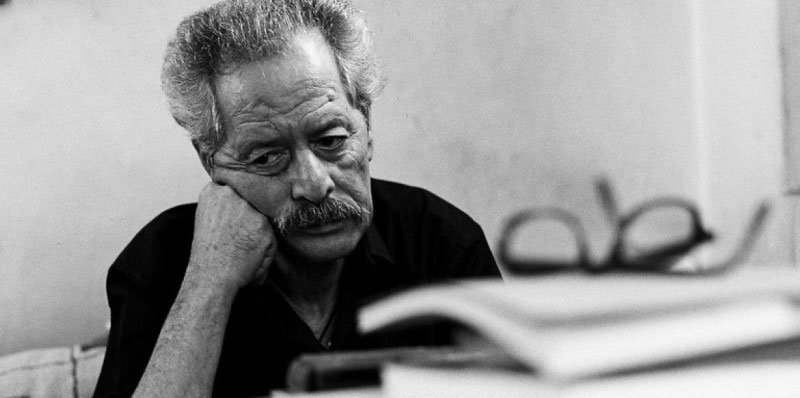
Can a man who couldn’t read a single word until his twenties become one of the most celebrated and controversial authors in the Arab world?
This is the extraordinary paradox at the heart of Mohamed Choukri’s story. His journey from an illiterate street child to a literary icon represents a stunning triumph of will. His work shattered social taboos and opened new paths for storytelling.

Born in 1935 in the Rif region, his early life was marked by poverty and famine. His native tongue was Tarifit, a Berber language. He lived through Morocco’s colonial era and its struggle for independence. These harsh experiences became the raw material for his powerful, autobiographical writing.
The Moroccan writer gained international fame with his novel “For Bread Alone.” His honest portrayal of marginalization and survival challenged literary conventions. He formed friendships with major global literary figures, further cementing his status.
Choukri’s legacy is that of a fearless voice. He gave a powerful narrative to the struggles of the poor and the oppressed. His life and work continue to inspire readers around the monde, proving that art can emerge from the most difficult circumstances.
Key Takeaways
- Mohamed Choukri’s life is a remarkable journey from childhood illiteracy to international literary acclaim.
- His work is known for its raw, autobiographical style that broke social and literary taboos in the Arab world.
- He wrote primarily in classical Arabic, though his first language was the Berber dialect Tarifit.
- His most famous work, “For Bread Alone,” details his harsh early life and brought him global recognition.
- Choukri’s writing is deeply connected to the historical context of 20th-century Morocco, including colonialism and independence.
- He is considered a pivotal figure who expanded the themes and stylistic possibilities of modern Arabic literature.
- His legacy continues to resonate, particularly with readers from marginalized communities who see their own stories in his work.
Early Life: Roots and Journey
Born amidst the devastation of regional famine, the author’s earliest memories were forged in hardship and displacement. His enfance began in 1935 in Aït Chiker, a remote Amazigh village in Morocco’s Rif mountains.
Family Origins in Aït Chiker
The mid-1930s were marked by severe famine following the Rif War. This period of guerre and drought created catastrophic conditions. His famille spoke Rifain, a Berber language, as their mother tongue.
From the Rif to Tanger
Extreme poverty forced the family to abandon their village. They undertook a difficult migration to Tétouan, then finally to Tangier. This journey reflected the broader misère affecting countless Moroccan families during those années.
Within the household, a tyrannical père created an atmosphere of fear. His violence toward his wife and enfants left deep psychological scars. The author would later accuse his father of causing his younger brother’s death.
These early experiences of hunger, violence, and loss became the raw material for future literature. The multilingual foundation of his enfance—Rifain, Moroccan Arabic, and Spanish—would shape his unique literary voice. His famille dynamics, especially the oppressive père, provided powerful themes for his autobiographical work.
Overcoming Poverty and Childhood Struggles
At eleven years old, a desperate escape from a violent home launched a boy into the brutal streets of Tangier. This act of survival began his harsh enfance adolescence as a street child.
Experiencing Famine and Forced Migration
In Tangier, the profound misère was constant. He lived in the city’s poorest quarters. This world was populated by prostitutes, thieves, and desperate souls.
To survive, he took small jobs. He worked as a guide for foreign sailors. This role helped him learn Spanish and navigate a dangerous port.
The famine that drove his famille from the Rif never left him. Mohamed Choukri wrote of this hunger in “Le Pain nu”. He described a night so desperate he was “vomiting saliva” from emptiness.
This constant violence and need shaped his worldview. The structural misère and neglect faced by many enfants defined his youth. These raw experiences became the core of his future, powerful writing.
Discovery of Literacy and the Power of Education
A prison cell became an unlikely classroom for a young man who had never held a book. At twenty years of âge, his imprisonment by Spanish authorities led to a life-changing meeting.
An independence activist became his mentor. This teacher patiently showed him how to lire and écrire in classical Arabic.
Learning to Read in Arabic
Mastering this new langue was a complex challenge. He already spoke Rifain and Moroccan Darija fluently. Classical arabe was different, a formal written system he had to learn from scratch.

Breaking Barriers of Illiteracy Later in Life
After his release, his determination only grew. In 1956, he moved to Larache. At twenty-one ans, he enrolled in a primary school.
He sat in classrooms with young children, undeterred by his late start. Choukri persevered through normal school to become a teacher. This educational journey mirrored Morocco’s own independence, a dual liberation.
Coming to written language as an adult shaped his unique voice. It gave his future work in littérature a raw, direct power. The écrivain proved that transformation is possible at any âge.
Rise as an Educator and Self-Made Writer
The 1960s found the former street child back in Tangier, now holding a teacher’s certificate and a pen. Choukri had achieved a stunning social transformation. His teaching career provided the economic stability and professional identity he had long lacked.
Transition from Street Life to the Classroom
His respectable job stood in sharp contrast to his personal world. He never fully abandoned the marginal spaces that had formed him. The author continued to frequent the bars and brothels of Tangier, drawing material from his own vie.
During these années, he began to write with brutal honesty. He committed his traumatic past to paper in standard Arabic. This was a courageous act for a new auteur, revisiting pain without apology.
His literary debut arrived in 1966. The prestigious Beirut magazine Al-adab published his short story “Violence on the Beach.” This marked his formal entry as a serious écrivain into the Arab literary scene.
Beginning his writing career in his thirties gave his work a unique power. Those ans of direct experience with poverty shaped a mature perspective. His late start, after a hard-won education, made his voice authentic and unforgettable for that temps.
Mohamed Choukri in the World of Literature
With short, dry sentences and unflinching honesty, this Moroccan author shattered the ornate conventions of classical Arabic writing. His entry into the world of littérature marked a radical departure.
He brought a raw, autobiographical voice that prioritized truth over tradition.
Distinct Literary Style and Raw Narratives
As specialist Yves Gonzalez Quijano noted, his early 1970s work was “very modern.” It featured “dry sentences, without frills, short, without necessarily any link between them.” This écrivain broke the established codes of littérature arabe.
His style emerged from necessity. Learning to write in classical arabe as an adult gave his prose a stark simplicity. There was no moralizing or decorative language.
Tahar Ben Jelloun highlighted the power of this approach. The great value of his roman “lay in its raw truth, without embellishments.” This directness made the livre resonate deeply with young Moroccans for decades.
Impact on Arabic and Moroccan Literature
His work opened new thematic territories for littérature arabe. He addressed taboo subjects like poverty and sexuality with unprecedented candor. This challenged conservative literary establishments across the Arab world.
Within littérature marocaine, he helped forge a distinct local voice. Alongside contemporaries, he shifted focus from imitating other Arab models to portraying Moroccan realities. His autobiographical honesty set a new standard for the genre.
His legacy is a littérature of authentic experience. It gave a powerful narrative to marginalized communities and expanded the possibilities of modern Arabic prose.
Encounters with Literary Legends
The cosmopolitan port of Tangier in the 1960s served as a magnetic crossroads for some of the world’s most famous literary rebels. This unique environment brought the Moroccan author into contact with major international écrivains.
He met figures like Paul Bowles, Jean Genet, and Tennessee Williams. These années defined a complex web of artistic and personal relationships.

Influence of Paul Bowles and Tennessee Williams
The relationship with Paul Bowles was particularly fraught. The American writer translated his famous novel into English. According to fellow writer Tahar Ben Jelloun, it was not a purely literary bond.
Money, sex, and interest were mixed into their dynamic. Paul Bowles paid a small sum for the life stories he recorded. This practice raised ethical questions about exploitation and authorship.
Meeting Tennessee Williams placed Choukri within a broader monde of Western artists. These écrivains sought freedom in Tangier’s permissive atmosphere.
Memorable Interactions with Jean Genet
His encounters with Jean Genet held a different resonance. The French writer’s own background of marginalization created certain parallels. Their interactions, however, were still shaped by post-colonial power dynamics.
The author later wrote detailed memoirs about Jean Genet and Tennessee Williams. Works like “Jean Genet and Tennessee Williams in Tangier” claimed narrative authority. He provided a crucial counter-perspective to relationships often told from the Western viewpoint.
Autobiographical Works and Unfiltered Narratives
The author’s literary power is most concentrated in his autobiographical trilogy. It begins with the groundbreaking livre “Le Pain nu.” This work chronicles his enfance and adolescence with shocking honesty.
The Enduring Legacy of Le Pain nu
This roman established a new model for Arabic autobiography. It rejects sentimental nostalgia. Instead, it presents a direct, almost documentary account of material survival.
The narrative’s unflinching violence is central. Choukri writes of his tyrannical père: “So my father exploited us… I had decided to steal from anyone who exploited me.” This portrays a temps where moral rules were bent for survival.
The auteur continued this story in “The Time of Mistakes” and “Visages.” His short stories also explore marginalized lives. The legacy of Le Pain nu is its radical permission to tell unfiltered truth.
Translation, Censorship, and International Reception
International readers discovered this raw narrative years before his own countrymen could legally read it. This was due to a complex history of translation and ban.
Milestones in Translation and Global Impact
Paul Bowles created the first English version in 1973. This brought the book immediate attention across the world.
The French translation by Tahar Ben Jelloun followed in 1980. Ben Jelloun said he translated it out of friendship. He also wanted to defend the work from critics.
Those critics attacked the Arabic language as too simple. The original text was not published in its home country until 1982.
Controversies, Censorship, and Cultural Rebellions
Morocco banned the book just one year later. Interior Minister Driss Basri acted after religious scholars protested. They objected to the frank content about a young life.
This censorship lasted until the year 2000. For almost two decades, readers abroad had full access. Meanwhile, readers in Morocco were officially denied their own story.
The controversy did not end there. In 2005, a university in Cairo removed the book from a course. The explicit passages caused another wave of debate.
Through translation, Tahar Ben Jelloun helped cement a global legacy. The work’s journey shows how art can cross borders, even when blocked at home.
Legacy, Cultural Impact, and Influences on Future Generations
From a censored writer to a nationally recognized figure, Mohamed Choukri’s legacy was cemented by his passing and the institutions he left behind. His journey from social outcast to literary icon was complete.
The official recognition at his funeral showed how much choses had changed. His status within littérature marocaine was now secure.
Foundations in Moroccan Literary History
Mohamed Choukri died of cancer on novembre 15, 2003, in Rabat. He was sixty-eight years old.
His burial at Tangier’s Marshan cemetery two days later was a state affair. The Minister of Culture and a royal palace spokesman attended. This honor contrasted sharply with the earlier mort of his books in Morocco.
Before his mort, he took steps to control his legacy. He established the Mohamed Choukri Foundation to manage his manuscripts and rights.
In a personal gesture of grâce, he provided a lifetime pension for his domestic worker, Fathia. She had served him for twenty-two years.
His most famous work reached new audiences through cinéma. Director Rachid Benhadj adapted “Le Pain nu” into a film in 2004.
This cinéma project was an Italian-Franco-Algerian production. It proved his story’s power beyond livres.
His raw honesty opened doors for future écrivains. He proved that stories from the margins belonged in littérature arabe.
Many lecteurs from poor backgrounds saw their lives reflected in his work. The écrivain marocain inspired a more authentic littérature marocaine. His influence continues to shape narratives today.
Conclusion
Ultimately, Choukri’s work challenges us to reconsider the very sources from which powerful literature can spring. His journey from an illiterate enfance marked by famine and family violence to celebrated écrivain shows remarkable determination.
The novel Le Pain nu remains his most enduring contribution. Its raw honesty about misère and survival gives voice to universal struggles. It transcended its specific temps and pays.
He broke barriers of illiteracy, langue, and censorship. His legacy inspires writers from marginalized backgrounds. He expanded modern littérature arabe with unfiltered narratives.
His vie embodies transformation through education and art. The auteur‘s work continues to resonate in discussions about social justice. It proves that powerful stories can emerge from the hardest années.
FAQ
What is Mohamed Choukri best known for?
He is best known for his raw autobiographical novel, Le Pain nu (For Bread Alone). This work chronicles his brutal childhood of poverty, violence, and famine in Morocco. Its unfiltered honesty made it a landmark in Moroccan literature and drew international attention.
How did his difficult early life influence his writing?
His early years were marked by extreme misère and displacement during the famine in the Rif region. This direct experience of survival, street life, and hardship became the core subject of his work. It gave his literature an authentic, visceral power that resonated with many.
When did he learn to read and write?
He learned to lire and écrire in Arabic quite late, beginning his formal education at the age of twenty. This remarkable journey from illiteracy to becoming a celebrated auteur is a central part of his personal legend and professional identity.
What was his relationship with other famous writers?
While living in Tangier, he formed significant friendships with literary icons like Jean Genet, Tennessee Williams, and Paul Bowles. Bowles translated his work into English, which was crucial for his global reach. These encounters between a self-taught Moroccan voice and established Western figures are famous in literary history.
Why was his work controversial and censored?
His explicit depiction of sexuality, social violence, and harsh criticism of familial and societal structures challenged taboos. For many years, his most famous book was banned in the Arab world for its content, making him a symbol of artistic censure and rebellion.
What is his legacy in world literature?
The author’s legacy is that of a fearless chronicler of marginalization. He expanded the boundaries of Arabic autobiographical writing with his stark, unflinching style. His life story of transformation and his books continue to inspire readers and écrivains globally, securing his place in literary history.