
What does it take for a fighter to be remembered as both a legend and a cautionary tale?
This question lies at the heart of one of combat sports’ most compelling stories. Born in Amsterdam to Moroccan parents, an athlete emerged who would dominate the world of kickboxing. His journey is a powerful saga of raw talent, incredible triumph, and profound struggle.
With a professional record of 106 victories and 92 knockouts, his power was terrifying. He captured multiple world championships, earning the nickname “The Golden Boy” for his skill. Yet, his career was equally defined by controversy, leading to another moniker: “The Bad Boy.”
His story follows a dramatic three-act structure. It details a meteoric rise to the top of the sport. It then explores a shocking fall from grace through personal and professional setbacks. Finally, it follows an ongoing quest for redemption that continues to captivate fans worldwide.
Key Takeaways
- Badr Hari is a Dutch-Moroccan fighter considered one of the greatest heavyweight kickboxers of all time.
- He boasts an astonishing 87% knockout ratio, the highest in the history of his weight class.
- His career is marked by multiple world championship titles in major organizations like K-1.
- He is known by two contrasting nicknames that reflect his dual legacy: “The Golden Boy” and “The Bad Boy.”
- His personal narrative is a complex mix of extraordinary athletic achievement and significant controversy.
- He holds a unique status as a cultural icon in Morocco and a polarizing figure in the Netherlands.
- His professional journey serves as a powerful study in the conflicts between immense talent and personal challenges.
Introduction to the Iconic Kickboxing Star
Rising from Amsterdam’s gyms to international arenas, a fighter emerged whose power and charisma redefined heavyweight kickboxing. Badr Hari became a global phenomenon, captivating audiences with an aggressive style and devastating knockout power.
Overview of a Global Phenomenon
His participation in the prestigious K-1 World Grand Prix transformed him from a promising prospect into an international superstar. Standing 198 cm tall with a 213 cm reach, his physical presence was immense.
What truly set him apart was his 87% knockout ratio, the highest in heavyweight history. This made him the most feared competitor in the sport.
Impact on Morocco and the International Stage
Beyond the ring, Badr Hari chose to represent Morocco, becoming a national icon. His decision inspired immense pride across the Moroccan diaspora.
He played a key role in popularizing kickboxing throughout North Africa and the Arab world. His fame transcended sports, connecting him with global celebrities and media.
This athlete used his platform for philanthropic efforts in his parents’ homeland. His legacy is as a cultural symbol and a source of inspiration for future generations.
Early Life and Roots in Amsterdam
Long before the bright lights of the arena, a young boy’s world was defined by the multicultural blocks of Amsterdam-East. His journey began with a family’s hope for a better future.
Childhood and Family Background
Badr Hari was born on December 8, 1984. His parents had emigrated from Morocco to the Netherlands seeking opportunity.
His father hailed from Oulad Teïma. His mother was Doukkalia, from the Doukkala region. Their Berber roots in the Houara tribe connected him deeply to North African culture.
He grew up with two older sisters, Houda and Asma, and a younger brother named Yassine. Family life was centered on hard work and providing for the children.
The Neighborhood that Forged a Fighter
The Indische buurt in Amsterdam-East was his playground. This working-class area was where he attended the Amsterdams Lyceum for primary school.
As a teenager, he spent days playing football in the streets. His friends included future professional footballer Mario Melchiot.
Yet, the neighborhood also presented challenges. He found himself in several street fights, which worried his parents.
Seeking a solution, his father took decisive action. He brought the young Badr Hari to the local Sitan Gym. The goal was simple: learn to defend himself properly.
This choice would unknowingly set the stage for a legendary combat sports career. The tough environment forged a resilient fighting spirit.
The Formation of a Fighter Identity
From his first steps into a kickboxing gym at age seven, a future legend began to take shape. Badr Hari was sent there by his father to learn self-defense. His natural talent was immediately obvious to his first coach, former World Champion Mousid Akamrane.
Early Training and Mentorship at Chakuriki Gym
As a teenager, he trained at Amsterdam’s Sitan Gym under Mohammed Aït Hassou. There, he sparred with future stars like Said El Badaoui and Nordin Ben Salah. This competitive environment pushed him to win nearly all his youth fights.
At fifteen, he moved to the legendary Chakuriki Gym. Under the direction of master coach Thom Harinck, his raw power was refined into technical skill. Harinck’s mentorship was crucial in shaping the young athlete’s aggressive style.
Transition from Muay Thai to Kickboxing
By age eighteen, he had an amazing amateur record. He won forty-nine of his fifty fights, showing his knockout power. This success made him ready for the professional stage.
His first pro fight in 2000 was against Rocky Grandjean. It ended in a surprising defeat. This loss was a hard but important lesson.
It taught the young fighter that the professional ring required more than just talent. True success would demand greater dedication and mental strength. This early setback helped forge the relentless identity he would become known for.
Determined Journey to Kickboxing Glory
A fighter’s reputation is built not just on wins, but on how they respond to defeat and seize unexpected opportunities. For Badr Hari, the years following his professional debut were a crucial proving ground.
Initial Tournaments and Amateur Successes
After his first loss, he scored two consecutive victories in 2002. Another defeat soon followed, highlighting the tough learning curve of the professional circuit.
A major turning point came in 2003. At just nineteen, he took a last-minute match against K-1 star Alexey Ignashov.
Despite a huge 18 kg weight disadvantage, he fought bravely. He held his own until the third round before a technical knockout ended the fight.
This gutsy performance earned Badr Hari immense respect from fans and promoters. It marked his arrival as a serious contender.
Seeking further growth, he left Team Chakuriki in 2005. He joined Simon Rutz’s Showtime team and later trained under coach Mike Passenier.
These early experiences forged the resilience needed for a champion’s career.
Badr Hari: Breakthrough and Championship Triumphs
For this athlete, the journey to the top culminated in a historic fifty-six-second fight. His path to the championship was built on resilience and a fierce desire for revenge.
First Major Victory and K-1 Heavyweight Title
The defining revenge came at the K-1 World GP 2007 in Yokohama. He knocked out Ruslan Karaev, avenging a prior loss and earning a shot at the inaugural heavyweight championship.
Key Matches and Rivalries that Defined His Career
His breakthrough began with a controversial loss at the K-1 World Grand Prix 2006. He rebounded with a reserve fight win and a brutal high kick that broke an opponent’s shoulder in the second round.
The title fight in Hawaii was swift. Badr Hari needed only fifty-six seconds to knock out Yusuke Fujimoto. This victory crowned him the first-ever K-1 Heavyweight champion.
Dramatic Championships and Title Fights
Dominance in the kickboxing world is proven not by a single win, but by a series of victories in the sport’s most prestigious events.
K-1 World Grand Prix and It’s Showtime Success
His championship era began with decisive revenge. He avenged a prior knockout loss to Peter Graham at the 2007 World Grand Prix, winning by unanimous decision.
Later that year, he knocked out Doug Viney to qualify for the K-1 World GP Final. His 2008 tournament run was impressive. He defeated legends Peter Aerts and Errol Zimmerman to reach the final.
In that final round against Remy Bonjasky, controversy struck. After a strong start, he was disqualified for illegal strikes, losing his champion belt.
He rebounded spectacularly in 2009. Facing the giant Semmy Schilt for the It’s Showtime title, he scored two quick knockdowns. He won the heavyweight championship in just forty-five seconds.
A successful title defense followed in 2010. He stopped Mourad Bouzidi with a second-round knockout in Prague.
Global FC and International Title Reigns
Badr Hari showcased his enduring power in 2014. He entered the GFC Series 1 tournament in Dubai.
He knocked out Stefan Leko in the semifinals. He then defeated Peter Graham again in the final to win the tournament. This victory earned him a massive prize and proved he remained a top champion.
Intense Rivalries with Global Competitors
In combat sports, a fighter’s legacy is frequently defined by their most heated battles against formidable opponents. Badr Hari faced many such tests, with each rivalry adding a layer to his complex career story.
Memorable Battles with Overeem, Bonjasky, and More
His feud with Alistair Overeem captured global attention. Their first face-off ended in a quick knockout loss for the fighter. He later gained revenge by stopping Overeem in the first round of their rematch.
The towering Semmy Schilt presented another dramatic challenge. He scored a lightning-fast victory over him, only to suffer a knockout loss in their next meeting.
Early in his career, Stefan Leko knocked him out with a spinning back kick. The fighter later returned the favor, using the same technique to knock out Leko.
His series with Peter Graham followed a similar pattern. After a spectacular knockout loss, he came back to defeat Graham twice.
His battles with Peter Aerts and Remy Bonjasky were particularly significant. Victories over Aerts proved his elite status in the ring.
Lessons Learned from Tense Ring Encounters
These rivalries taught the fighter about emotional control. The need for precise adaptation became clear after facing Stefan Leko and Peter Graham.
A single victory never guaranteed future success, as seen with Semmy Schilt. His ability to seek revenge, like against Alistair Overeem, showed mental toughness.
However, moments of uncontrolled aggression in the ring also led to setbacks. Each face-to-face clash in the first round revealed a different aspect of his fighting spirit.
Controversies and Legal Encounters Outside the Ring
Beyond the roar of the crowd and the glare of the spotlight, a darker narrative unfolded for the fighter. His life outside the competitive ring became a series of legal battles and public scandals.
These incidents crafted a reputation that often overshadowed his athletic achievements.
High-Profile Legal Issues and Public Backlash
In October 2012, serious assault allegations halted his career. He was blocked from K-1 events, missing prime competitive years.
The most severe case involved an assault on millionaire Koen Everinck. Badr Hari served seven months in pre-trial detention for this.
He claimed the attack was due to a comment about his girlfriend. This defense failed in court.
In 2017, he received a two-year prison sentence for voluntary assault and battery. He was also convicted for assaults on his partner.
Media Portrayal and the “Bad Boy” Persona
The constant media coverage fueled his “Bad Boy” nickname. It came from both his fighting style and his off-stage actions.
Badr Hari has stated that many rumors about him are untrue. Yet, the documented legal facts created a polarizing public image.
This persona brought him attention but also limited his opportunities. He had to face real consequences for his actions.
The fighter would eventually need to face this damaged reputation in his quest for redemption.
Overcoming Adversity and Fight Cancellations
After legal troubles, a fighter’s return to the ring faced a new series of physical and regulatory hurdles. Beyond the courtroom, Badr Hari encountered injuries, failed tests, and pandemic disruptions that repeatedly stalled his momentum.
Suspensions, Injuries, and Unexpected Setbacks
His 2013 comeback at the K-1 World Grand Prix in Zagreb started with a win. A foot injury forced his withdrawal from the tournament immediately after.
A third match with Zabit Samedov in Moscow ended badly. He was knocked down in the first and second round, failing to beat the count.
A 2018 victory was overturned a year later. Both fighters used supplements with banned substances, leading to a suspension.
In April 2019, he failed a drug test before Glory 51. This resulted in a nineteen-month suspension from competition.
His post-suspension fight for the Glory title in 2019 showed promise. He scored two knockdowns but broke his ankle in the third, ending the bout.
The COVID-19 pandemic caused further delays. A scheduled fight was postponed multiple times after he tested positive for the virus.
This pattern of injuries and failed test results created constant frustration. Each suspension and cancellation blocked the path to lasting success.
The Redemption Phase and Recent Battles
The quest for redemption in combat sports often follows a path of heartbreaking near-misses and painful setbacks. This phase saw the veteran fighter return to the world’s premier stage.
Return in Glory Kickboxing and Recent Comebacks
Badr Hari made his glory kickboxing debut against champion Rico Verhoeven in 2016. He won the first round but broke his arm in the second, leading to a stoppage.
At Glory 76, he lost a championship eliminator match to Benjamin Adegbuyi by knockout. This extended a difficult period for the athlete.
Against Arkadiusz Wrzosek in 2021, he scored three knockdowns early. A head kick later in the fight knocked him out cold.
Their 2022 rematch ended in a no contest due to arena rioting. He would later face Alistair Overeem, with the loss overturned after a failed drug test.
Redefining His Legacy in the Ring
His 2019 rematch with Rico Verhoeven drew millions of TV viewers. This proved his star power remained immense despite results.
Each match in this era added to a complex legacy. Badr Hari showed that a fighter’s influence extends far beyond the win column.
Personal Life, Fame, and Influence in Morocco
Beyond the headlines of fights and controversies lies a personal narrative centered on family, music, and a profound connection to a homeland.
Family, Friendships, and Cultural Impact
His life outside the spotlight is built around his family. He shares five children with his Dutch wife, Daphne Romani.
His circle includes global celebrities like football star Cristiano Ronaldo. The athlete now calls Morocco home, owning several properties there.
He describes himself as a “world citizen,” dividing his time between cities like Casablanca and Marrakech.
In the Netherlands, his reputation is complex. In Morocco, he is a revered icon and top media personality.
He has expanded into music, collaborating with artists like Meek Mill. A business deal also made him an ambassador for a nutrition brand.
Supporting National Pride and Future Generations
His pride in his Moroccan heritage is immense. It stems from his parents’ sacrifice in leaving for a better future.
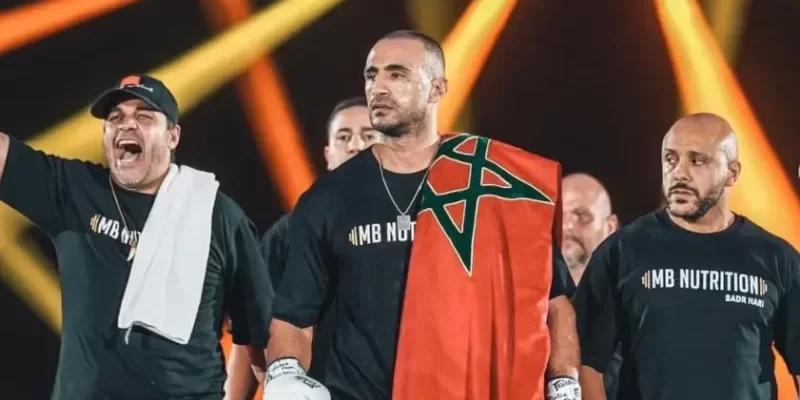
He consciously chose to represent Morocco in the kickboxing ring. He wears the national flag with immense pride.
Badr Hari has stated his victories are for all Moroccans. He wants to show that anything is possible with hard work.
The Future of a Legendary Kickboxer
Navigating the twilight of an athletic career requires a different kind of strength than what is needed in the ring. For Badr Hari, this phase is defined by uncertainty.
At forty-one, his future in the sport is unclear. An extended winless streak and the physical toll of injuries have ended multiple recent fights.
Upcoming Challenges and Potential Rivalries
His record of 126 fights shows a legendary career. Yet, 92 knockouts also mean accumulated damage over two decades.
Returning to be a world champion seems unlikely. The natural decline in speed and recovery is a major factor.
Potential legacy fights against former rivals could offer a fitting finale. Exhibition matches might let him compete without the pressure of a title.
Vision for Life Beyond the Ring
Opportunities beyond competition are vast. Badr Hari could coach the next generation of Moroccan and Dutch fighters.
His celebrity status in Morocco opens doors in media and business. Philanthropic work supporting youth sports is another powerful path.
His legacy is already secure as one of kickboxing’s greatest heavyweights. A successful ending may not require one more win, but a thoughtful transition into his next chapter.
Conclusion
A career spanning 126 professional fights tells a tale of statistical dominance intertwined with human frailty. Badr Hari built a legendary record with 106 victories and an unmatched 87% knockout ratio. His reign as a champion included multiple K-1 titles and memorable runs in the World Grand Prix.
Yet his story is equally defined by controversy and setback. Legal issues, suspensions, and injuries created haunting “what if” moments. This duality makes him a kickboxing cautionary tale as much as an icon.
His legacy is secure. He remains a symbol of Moroccan pride and one of the sport’s most powerful figures. The saga of his rise, fall, and quest for redemption ensures Badr Hari will be debated and remembered for generations.
FAQ
What was Badr Hari’s most significant career achievement?
His most celebrated achievement was winning the prestigious K-1 World Grand Prix in 2008. This victory, which included defeating top fighters like Semmy Schilt and Peter Aerts, cemented his status as a global kickboxing champion and the sport’s biggest star at the time.
Why was his match against Alistair Overeem so famous?
Their 2008 clash for the K-1 Heavyweight title is legendary for its sheer intensity and dramatic finish. It was a brutal, back-and-forth war that ended with a stunning knockout, highlighting the fierce rivalry between two of the era’s most powerful strikers.
What caused his lengthy suspension from competition?
He faced a major suspension following an incident in a 2019 Glory Kickboxing match against Rico Verhoeven. This disciplinary action was a significant setback, keeping him out of the ring and testing his dedication to the sport during a key phase of his career.
How did his upbringing influence his fighting style?
Training at the renowned Chakuriki Gym in Amsterdam under strict mentors forged his aggressive and technical approach. His background in Muay Thai provided a solid foundation, which he later adapted into a dynamic and powerful kickboxing style that captivated audiences worldwide.
Is he still actively fighting in major promotions?
Yes, he has made a notable return to the spotlight with Glory Kickboxing. His recent comebacks against opponents like Arkadiusz Wrzosek demonstrate his enduring skill and desire to redefine his legacy on the sport’s biggest stage.
What is his relationship with his Moroccan heritage?
He is a massive source of national pride in Morocco. His success on the international stage has inspired countless young athletes there, and he actively carries the flag, representing his roots with every high-profile match he competes in.