
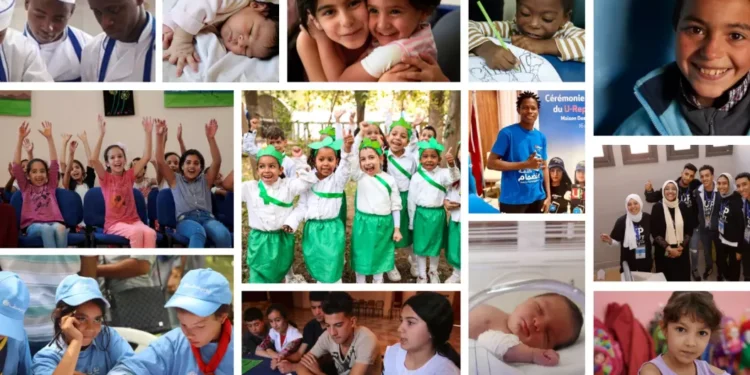
What if a single organization could change the future for millions of children across a nation? In Morocco, a dedicated branch of the United Nations works tirelessly to make this vision a reality.
This agency focuses on the well-being of enfants from all backgrounds. Its mission is to ensure every child has access to health, education, and protection. The work is built on a strong partnership with local authorities.
In 2024, a major report highlighted a year of significant action for enfance in the country. This document showcased advances achieved through collaboration. The fonds operates under the broader mandate of the nations unies.
The goal is to create lasting, systemic change. Programs reach children in both cities and rural villages. The approach is comprehensive, aiming to leave no child behind.
Key Takeaways
- The organization is a United Nations agency dedicated to child welfare.
- Its work in Morocco is conducted in close partnership with national authorities.
- Key focus areas include health, education, and social protection systems.
- The year 2024 was marked by significant documented progress for children.
- Programs are designed to be inclusive, reaching children across the country.
- The mission aligns with global sustainable development goals.
Overview of UNICEF Maroc’s Mission and Impact in Morocco
Strategic alliances between international and national bodies have driven the evolution of child protection systems. This partnership has created lasting frameworks for child welfare.
Historical Contributions to Child Welfare
The organization’s historical engagement includes pivotal moments in policy développement. In 2018, support for the National Assises on Social Protection was crucial.
This event produced specific recommendations for universal child coverage. The resulting rapport guided subsequent national strategies.
By 2019, collaboration with the government yielded an integrated public politique. This policy spans 2020-2030 with clear objectives.
Technical assistance strengthened institutional capabilities for child-sensitive programme implementation. This soutien helped build sustainable systems.
Collaboration with National Authorities
Effective coordination occurs through technical working groups and steering committees. These mechanisms ensure alignment with national priorities.
The nations unies agency partners with multiple ministries. These include Health, Education, Economy, and Justice.
Capacity-building remains a cornerstone of this cooperation. Training programs enhance service delivery for children across regions.
This long-standing partnership with UNICEF Maroc continues to address emerging challenges in child welfare.
Advancements in Child Protection and Social Coverage
Morocco’s social protection landscape witnessed unprecedented progress in 2024 as comprehensive reforms reached millions of children. The country achieved a remarkable milestone with 80% of children now benefiting from social coverage systems.
Implementation of Aide Sociale Direct and Welfare Programs
The aide sociale directe program launched in December 2023 marked a historic shift. This initiative provides monthly financial support to poor and vulnerable families.
Approximately 4.8 million children aged 0-17 years now receive benefits through this direct social aid regime. The program includes birth allowances and special supplements for orphans and children with disabilities.
An additional 3.9 million children continue receiving family allowances through contributory systems. This dual approach creates comprehensive couverture sociale for the nation’s youth.
Efforts to Ensure No Child Is Left Behind
The fundamental goal is to laisser aucun enfant without support. Programs specifically target marginalized groups including street children and migrant youth.
Digital enrollment systems help identify vulnerable households quickly. Social service personnel ensure inclusive delivery for families without digital access.
This approach guarantees that aucun enfant côté remains excluded from essential protection sociale benefits.
Supporting Children’s Health and Nutrition in Morocco
The year 2024 marked significant advancements in child health infrastructure and nutritional awareness campaigns across Morocco. Comprehensive programs focused on three strategic pillars to improve outcomes for young enfants.
These initiatives combined service delivery improvements with community education. The approach ensured both quality services and family engagement in health practices.
Nationwide Immunization and Health Campaigns
Substantial soutien strengthened Morocco’s National Immunization Program. Seventy-three health professionals received training in vaccine management and cold chain protocols.
The organization installed 350 certified refrigerators across 101 health facilities. This infrastructure investment maintained vaccine efficacy throughout the country.
Procurement services provided nine essential vaccines valued at $9.6 million. Awareness campaigns promoted the national vaccination calendar to over seven million people.
Promoting Early Childhood Nutrition Initiatives
The “First 1,000 Days” campaign emphasized optimal nutrition from pregnancy through age two. This critical window supports healthy développement for young enfants.
Community sessions reached 13.5 million people with nutritional guidance. Direct engagement through 36,000 sessions taught proper feeding practices.
This integrated programme combined infrastructure support with behavioral education. The comprehensive approach addressed both supply and demand for child health services.
Innovations in Education and Early Learning Programs
Despite significant progress, educational gaps persist for vulnerable enfants across the country. Approximately 20% of children aged 4-5 years lack access to preschool services, particularly in rural areas.
Expanding Access to Preschool and Early Education
Technical assistance helped develop innovative models for remote zones. A pilot initiative in the Oriental region tests scalable solutions based on international experiences.
For younger enfants aged 0-3 years, quality standards for childcare nurseries were established. This supports early childhood développement during critical formative years.
A collaborative study measures early learning outcomes and quality. This research provides essential data for improving the education système.
Strategies to Reduce School Dropout Rates
During 2023-2024, approximately 294,458 students left school. A multisectoral model specifically targets adolescent girls’ retention.
These measures achieved an average 3.2% reduction in dropout rates. Life skills interventions benefited 44,500 young people, strengthening their educational persistence.
The objectif remains ensuring all enfants maroc receive quality education. Continued focus on early développement creates lasting positive impacts.
Data Collection and Policy Development for Child Welfare
Evidence-based decision-making requires comprehensive information about children’s living conditions. In 2024, significant efforts strengthened national data systems to better understand the situation enfants across Morocco.
Utilizing National Surveys and MICS for Policy Insights
The organization supported two major data collection operations. The first involved Morocco’s 7th General Census of Population and Housing conducted by the High Commission for Planning.
The second operation prepared the Multiple Indicator Cluster Survey (MICS7) for 2025 implementation. This survey will provide data for nearly 40% of all Sustainable Development Goals indicators.
A new partnership between HCP and the Ministry of Health and Social Protection enhanced data sharing. This collaboration supports preparation of the next comprehensive rapport on children’s well-being.
The data will also enable the third measurement of multidimensional child poverty. This approach goes beyond income measures to assess deprivations in health, education, and other essential matière.
Robust information creates the foundation for targeted politique interventions. It helps identify vulnerable children and monitor program effectiveness for continuous développement.
UNICEF Maroc Collaborations and Future Initiatives
The success of child-focused programs relies heavily on coordinated efforts between diverse institutional actors. This collaborative approach ensures comprehensive support reaches children across different sectors and regions.
Strengthening Partnerships with National and International Stakeholders
Multiple government ministries work together on child welfare initiatives. These include Health and Social Protection, National Education, and Economy and Finance departments.
Each ministry contributes specialized expertise to the collective programme. This intersectoral cooperation addresses children’s needs holistically.
International partnerships provide crucial soutien for national reforms. The European Union offers significant financial backing for social protection systems.
Justice sector collaboration has improved responses for children in legal situations. Modern communication techniques and videoconferencing reduce trauma during proceedings.
Territorial Child Protection Mechanisms represent a key initiative for local governance. In 2024, 82 regions adopted decisions to create protection committees.
However, only 23 committees became fully operational. This gap highlights implementation challenges in the child protection system.
The primary objectif remains strengthening national capacities for sustainable impact. Future efforts will focus on universal social coverage and service quality improvements.
Capacity building ensures lasting systems change beyond direct involvement. This approach guarantees continued protection for all children.
Conclusion
A historic convergence of policy and partnership has reshaped the landscape for young citizens. The achievements of 2024 mark significant strides toward the core objectif of universal couverture sociale.
This progress directly supports the global développement durable agenda. The fundamental principle is to ensure robust protection for every stage of enfance.
Evidence from the latest rapport guides these ongoing efforts. The work of UNICEF Maroc and its partners continues to build a future where no child is left behind.
Collaboration remains key to creating lasting, equitable systems for all children in the nation.